The phosphocreatine paper
Tesamorelin and muscle recovery after exercise
A recovery measurement gives the muscle story an unusual starting point. The association is interesting enough to deserve its own page, with the enthusiasm kept precise.
The exercise and scan
The 2014 muscle-recovery paper followed 39 adults with obesity and reduced growth-hormone secretion over 12 months. Researchers used phosphorus magnetic resonance spectroscopy to measure recovery of phosphocreatine after muscle exercise. Phosphocreatine helps replenish the energy available for muscle work; the recovery measurement offered a way to investigate mitochondrial function.
Following a named reserve in muscle after a task gives the result a location, an event and a measurement. A test like this offers more to discuss than a general claim about feeling energetic.
The population deserves just as much specificity. These adults were selected for obesity and reduced growth-hormone secretion. This was a different setting from the pivotal HIV visceral-fat trials.
What changed with IGF-I
Tesamorelin raised IGF-I more than placebo. Across the study, the increase in IGF-I was positively associated with improved phosphocreatine recovery. The authors interpreted that association as suggesting improved mitochondrial function.
The wording matters because the recovery finding is expressed as a relationship with hormone change. It leaves a further question about causation. For me, that relationship stops short of a demonstrated treatment effect on strength, or a finding that every tesamorelin recipient had better recovery.
A future experiment could measure a physical task alongside the hormone and recovery responses.
Mitochondrial function
Mitochondria supply energy within cells. In this paper, the phosphocreatine recovery measurement was used to investigate their function. The research result stays close to that measurement.
There is an understandable temptation to imagine the rest: more stamina, easier stairs, a stronger leg. The curiosity is easy to share; my judgment about those outcomes remains reserved. The paper did not establish a strength or walking benefit. A scan can reveal something worthwhile before that larger question is answered.
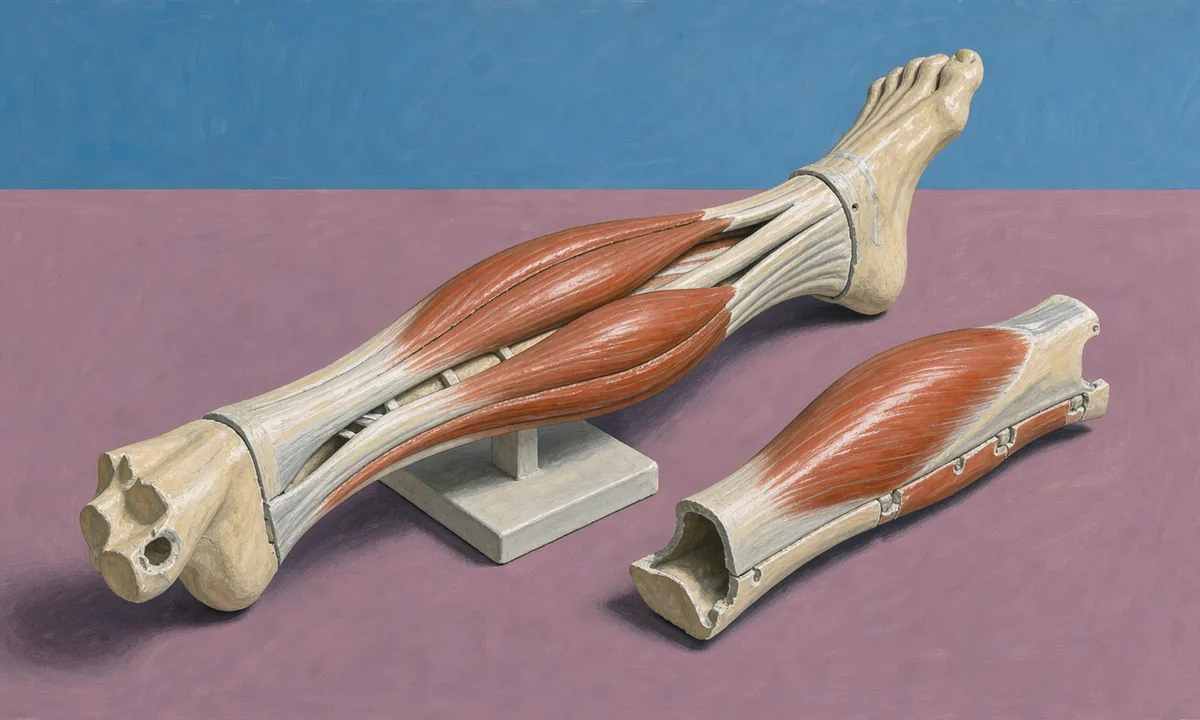
A future strength experiment
A trial that measured both phosphocreatine recovery and a physical task could make this much more satisfying to review. My first questions would concern whether the measurements moved together, how consistently participants responded and whether any gain lasted. Those are questions for future work.
Meanwhile, the lean-body-mass increase in the HIV trial meta-analysis adds a separate finding to the record. It cannot fill in the missing performance result from the smaller muscle experiment. The main trial review gives that lean-mass finding its own population and context.