How your liver's IGF-1 changes
Tesamorelin Mechanism of Action in Body Steps
Growth hormone leaves your gland in short spurts. Studies also track IGF-1 from your liver and changes in organ fat.
What did the tesamorelin studies measure?
Studies measured brief releases of growth hormone. They also tracked firm fat around your organs. The work went beyond a theory.
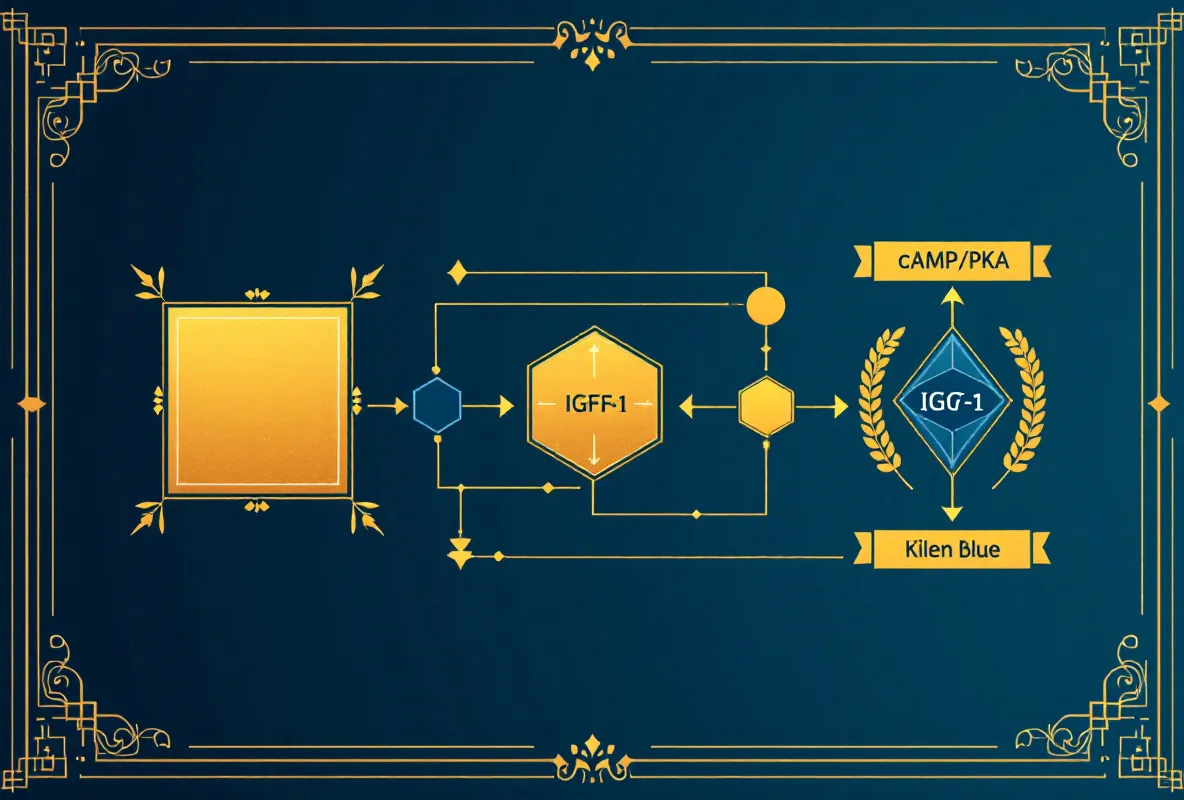
Tesamorelin mimics the brain's message. That message travels to the small gland below your brain. Growth hormone comes from there.
Growth hormone tells your liver to make IGF-1. This second hormone helps your organ fat break down.
Tesamorelin has a changed end. That change slows how quickly your body cuts it apart. The drug gets more time to act.
Tesamorelin doesn't replace growth hormone. Your own gland still makes it. That's the key point for you.
How does tesamorelin get your gland working?
Gland cells recognize tesamorelin's message [4]. That message starts work inside each cell. The cells make growth hormone, then let it out [11].
Your hormone arrives in brief spurts. It doesn't flow at one level all day. Your body normally uses changing levels.
Researchers found tesamorelin in blood during those spurts [11]. IGF-1 from your liver rose later. The two changes moved together.
Tesamorelin doesn't add growth hormone to you. Your gland makes and releases more. Injected growth hormone skips that step [6].
How much did IGF-1 rise after tesamorelin?
A small study followed 13 healthy men. It lasted two weeks. Each man got 1 daily shot of 2 milligrams. You weren't in that group.
The paper reported an IGF-1 rise and 1 nighttime rise. IGF-1 climbed by 181 millionths of a gram per liter of blood [4]. The paper gives no healthy range here. Growth hormone rose overnight too [4].
That blood change can't settle long-term safety. Then 1 larger 26-week HIV trial found another rise [1].
A separate study ran 12 months. It followed adults with obesity and low growth hormone.
They worked one leg muscle during a test. A scan timed stored muscle fuel returning as IGF-1 rose [7]. The test didn't show easier walking or greater strength. The two-hormone process explains what researchers followed.
Why does tesamorelin cause short hormone spurts?
Your gland stores growth hormone in tiny packets. Tesamorelin prompts the cells to open them [11]. The cells also make more hormone.
Your gland doesn't release one steady stream. It sends short amounts at different times. Researchers tied those releases to tesamorelin in blood [11].
The drug doesn't take over the gland. It works through the gland's usual timing.
Injected growth hormone passes that step. Tesamorelin doesn't [6]. These routes aren't the same.
What else can change your hormone release?
These weren't tesamorelin benefit trials. They tested how sex hormones alter growth hormone. They can't predict your fat loss.
One study gave 26 older men a lab-made brain message. With testosterone, their glands released about twice as much growth hormone [8]. Estrogen and body size changed release too. None predicts yours.
Researchers lowered sex hormones in 24 young men. Then they gave two lab-made messages. Growth hormone and IGF-1 still rose [9]. More organ fat went with less growth hormone. The study didn't explain why.
A third study had 60 women past menopause. Researchers first used medicine to hold back growth hormone. After estrogen fell, the gland released less when that medicine wore off [10].
These 3 studies leave one warning for you: at least 2 other hormones can alter your gland. They don't show a health gain.
How quickly does tesamorelin leave blood?
Blood loses tesamorelin quickly. A formula in 1 paper expresses that speed as 1,060 liters an hour [11]. That's an imagined volume used for drug removal. It isn't your blood volume, and no blood leaves you.
Other medical sources give 26-38 minutes. By then, only half the drug remains. Your body keeps a later effect much longer.
IGF-1 stays raised after tesamorelin leaves. That rise lasted through the study day [11]. This longer change supported one daily shot in trials.
A changed end slows the drug's breakdown [6]. This is an altered drug part, not a coating.
The mechanism page begins with body steps. Dosing in the trials keeps the timing tied to your research questions.